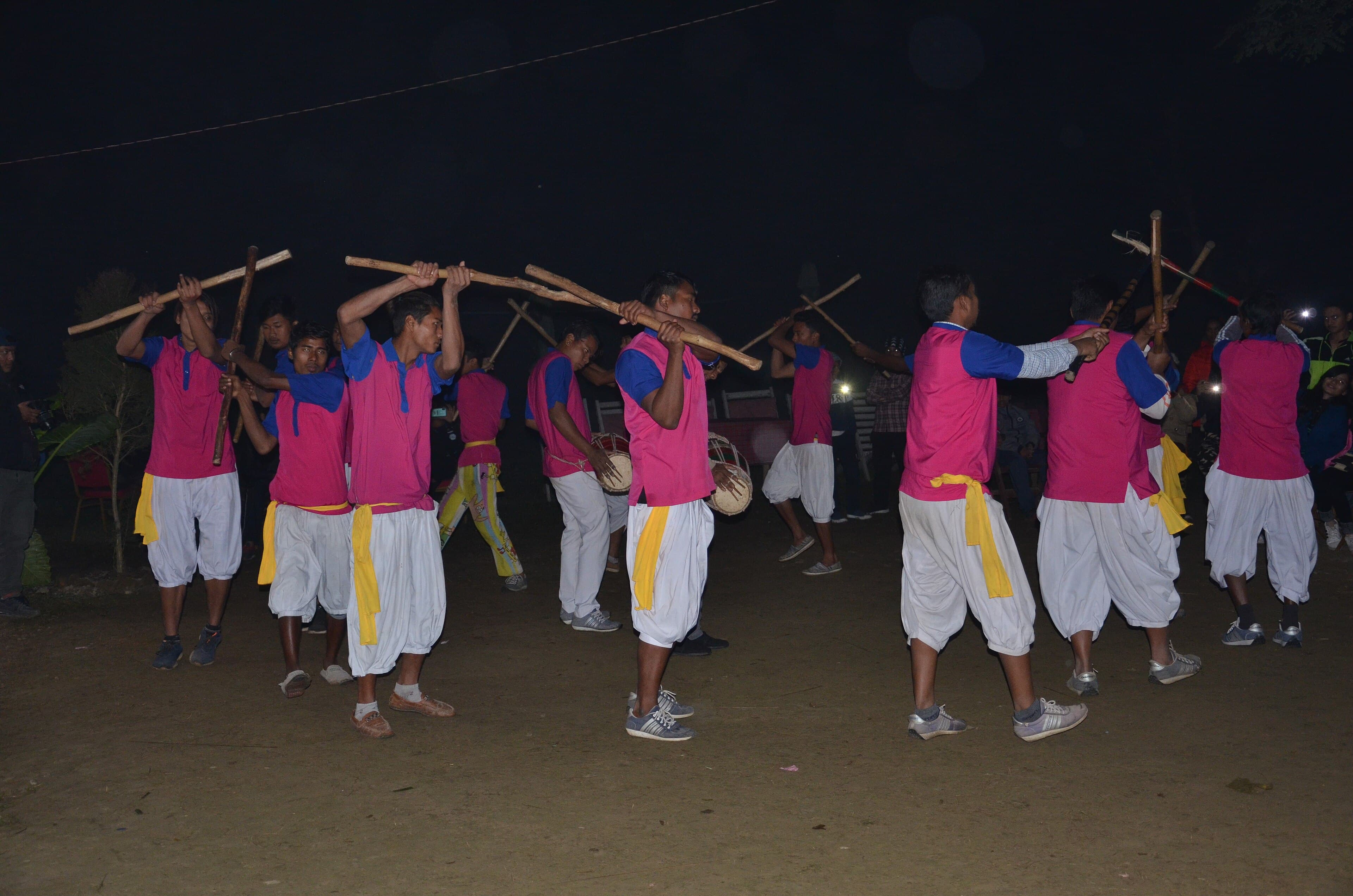
Tharu dancers performing the stick dance near SaurahaPhoto: Pratap Baniya · CC BY-SA 4.0

Home / Culture

The Oldest Voices of the Valley

Tharu Culture

The land of the indigenous Tharu community, who have inhabited the Chitwan valley for centuries and are renowned for their distinctive cultural practices.

Long before Chitwan was a national park, it was — and remains — Tharu country.

The Tharu are the indigenous people of the Terai. For generations they lived in the malarial lowlands that few others could inhabit, developing a degree of inherited resistance to the disease and a deep, practical knowledge of the forest, its rivers and its seasons.

When malaria was controlled in the 1950s and the valley opened to settlement and later to conservation, the Tharu paid a heavy price. As protected areas were established, many Tharu families were displaced from traditional lands. It is a difficult and important part of the park's story — one that sits alongside the conservation success, not behind it.

Today Tharu communities live throughout the park's buffer zone, and their culture is one of the great reasons to visit: the architecture of mud-and-daub longhouses, the cuisine, the music, and above all the dances.

The Tharu stick dance in performancePhoto: Pratap Baniya · CC BY-SA 4.0

Living Tradition

The Tharu stick dance

The most famous Tharu performance is the lathi or stick dance, in which dancers strike wooden sticks in fast, interlocking rhythms. Community-run evening performances near Sauraha keep the tradition alive — the authentic versions are led by the villages themselves rather than staged purely for tourists.

Ways to Connect

Experiencing Tharu culture

Bush foods & cuisine

Tharu cooking draws on the rivers and forest edges — freshwater fish, snails, wild greens and grains. Food is central to Tharu identity and festivals.

Language

The Tharu speak their own languages and dialects of the Terai. Learning a few words of greeting is warmly received in the villages.

Cultural museum

The Tharu Cultural Museum & Research Centre near Sauraha holds dioramas, tools and paintings relating to Tharu life and history.

Village homestays

Community homestays in the buffer zone offer an authentic window into daily Tharu life and channel tourism income to local families.

Bikram Baba, Kasara

A Hindu pilgrimage site within the park at Kasara, drawing devotees from nearby areas and India.

Balmiki Ashram, Tribeni

A revered pilgrimage place at the park's western edge, associated with the sage Valmiki.

Travel with respect. Tharu culture is living, not a performance. Ask before photographing people, choose community-run experiences and homestays where income reaches local families, and treat religious sites with the same care you would any place of worship.
An evening of Tharu music and dance

Hear the stories of the Terai

Combine a wildlife safari with an evening of Tharu music and dance.